Is Google Translate good enough (podcast)
Bill Swallow discusses the possibilities and the limitations of machine translation tools such as Google Translate.
When is Google Translate good enough and when do you need professional (human) translation?

Bill Swallow discusses the possibilities and the limitations of machine translation tools such as Google Translate.
When is Google Translate good enough and when do you need professional (human) translation?

Machine translation continues to evolve. With artificial intelligence in the mix, machine translations seem almost human. Google Translate is one of the top players in this market, supplying everything from basic text translation to browser-embedded (Chrome) translation to a robust translation API. But even with all of these options, is Google Translate good enough?

00:00 Bill Swallow: Welcome to The Content Strategy Experts podcast brought to you by Scriptorium. Since 1997, Scriptorium has helped companies manage, structure, organize and distribute content in an efficient way. In episode 19, we discuss best practices for localizing DITA content.

There are special considerations when localizing DITA content. In this podcast, Bill Swallow and Simon Bate discuss the conventions available in DITA for localization, and share anecdotes and advice to help you circumvent localization problems.
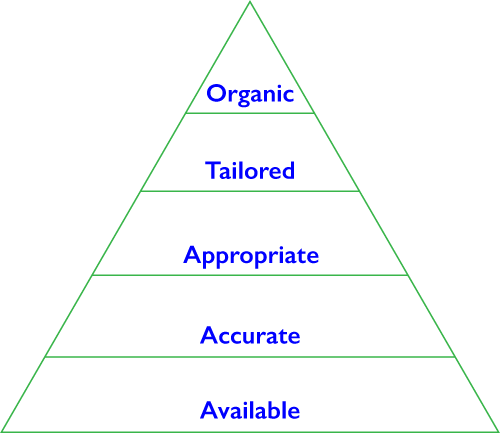
Do you need to supply translated content? Use this hierarchy of localization needs to shape your localization strategy.

Without centralized localization processes, you will pay more for translated content, provide inconsistent translations, and possibly expose your company to significant legal liability. Here are warning signs your company needs a better localization strategy:

This post is part of a series on the value proposition of localization strategies.
A successful strategy requires more than having the right tools and processes in place. They need to be measured and governed.

This post is part of a series on the value proposition of localization strategies.
When people think of internationalization (IF they think of it), software labels often come to mind—buttons, menus, and other user interface text. But content development can benefit from it as well.

My 2017 trend is the impact of machine translation on content strategy.

This post is part of a series on the value proposition of localization strategies.
Accuracy and accelerated time to market are key success factors in every localization project. Proper terminology management contributes to both of these factors.

This post is part of a series on the value proposition of localization strategies.
The source content you develop is your intellectual property. The translation of that source content is also your intellectual property, regardless of who performs the translation.

This post is part of a series on the value proposition of localization strategies.
You can make localization “better” by taking a look at localization value. Quality and cost are important value factors, but improved time to market returns the greatest value.
Improving time to market for localized products and content is no easy task. It’s not as simple as adding more translators to the effort; that may cause more problems (and more delays). Improving time to market involves moving localization up the project chain, and to do so effectively requires a localization strategy.
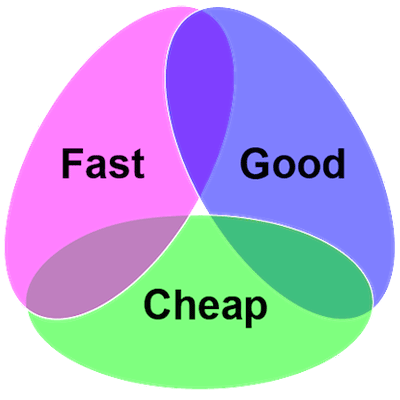
This post is the first in a series about the value proposition of localization strategies. You can also see a presentation on this topic at LavaCon this October.
Localization issues are a primary reason companies seek help with a new content strategy. One of the most common questions we hear is, “How do we make our localization process better?”
When we’re asked this question, we turn the question around. What is wrong with your current localization process? What would you like to improve? How do you define “better?”
$0.21 per word.
That’s the average cost in the US to translate content into another language according to Slator, a translation news and analytics site. That number is not speculative; they analyzed the costs per word from over 80 actual proposals gathered by the US General Services Administration (GSA). You can view the source proposals here.

It takes considerable planning and effort to run a successful localization project, from following best practices to evaluating vendors to finding and fixing the weakest link in the localization chain. But the localization process does not end when you receive the translations. Localization testing is necessary for ensuring that your content and products are ready for a distributed global release.

Translating content for foreign markets can be an expensive and time-consuming endeavor. While it’s important to keep costs in check, the critical element to watch is quality. The only sure-fire way to ensure quality in translation is to build it into your source.

You have DITA. Now what?
More companies are asking this question as DITA adoption increases. For many of our customers, the first wave of DITA means deciding whether it’s a good fit for their content. The companies that choose to implement DITA find that it increases the overall efficiency of content production with better reuse, automated formatting, and so on.

In this webcast recording, Scriptorium’s Alan Pringle, Bill Swallow, and Gretyl Kinsey look at 2016 trends in content and content strategy. Sarah O’Keefe moderates.

Let’s wrap up 2015 with a look back at popular posts from the year.
Scriptorium wishes you the best for 2016!
When you travel, do people ask you for directions and address you as if you live in the area? I’ve had that happen a few times, and friends and colleagues have shared similar experiences.
You may not stand out as an obvious tourist on your travels. But does the content you distribute fit in as well across different environs?

There is an old proverb that says, “a chain is only as strong as its weakest link.” While many of the links in the chain could be quite strong, it only takes one weak link to break the chain. There is one process chain in particular where this proverb rings true: localization. However, more often than not, little or nothing is done to identify and strengthen the weakest link in that process.
Product development, content development, and localization processes are too often viewed as a waterfall process.
This is not at all accurate.
When companies need to change the way they’re producing content, localization and scalability can be two of the biggest motivating factors. If your company’s content is not consistent, you may face significant challenges with translating it into new languages or distributing it via new platforms. A content strategy that embraces consistency and emphasizes planning for the future will help your company navigate these changes more smoothly.
Things have changed since we wrote this! Check out the latest post here with new insights from our team.
This premium post is a recap of a presentation delivered by Sarah O’Keefe at Localization World Berlin on June 4, 2015. It describes how and why to align localization strategy to the customer journey.
The new buzzword in marketing is the customer journey. What does this mean for localization?