
Easy ways to undermine marketing with content strategy
Does your content deliver on your marketing promises?

Does your content deliver on your marketing promises?

This post is part of a series on the value proposition of localization strategies.
You can make localization “better” by taking a look at localization value. Quality and cost are important value factors, but improved time to market returns the greatest value.
Improving time to market for localized products and content is no easy task. It’s not as simple as adding more translators to the effort; that may cause more problems (and more delays). Improving time to market involves moving localization up the project chain, and to do so effectively requires a localization strategy.

We’ve written before on what lurks beneath the surface of an InDesign file, and how drastically it differs from the DITA standard. When you’re looking at going from DITA to InDesign, though, there’s a lot that you need to take into consideration before you jump in.

This article shows how Scriptorium helped one company use XML to integrate information in a database with desktop publishing content.
In most enterprises, useful content exists in a number of different tools or databases. To include that content in your publications, you might use traditional ways of moving the information, such as copy and paste. However, it can be far more reliable, repeatable, and efficient to automate conversion from those tools and integrate the result directly into your publishing solutions.
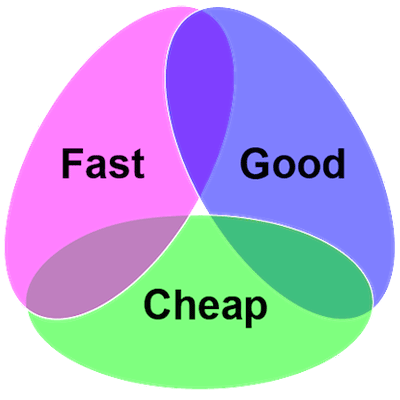
This post is the first in a series about the value proposition of localization strategies. You can also see a presentation on this topic at LavaCon this October.
Localization issues are a primary reason companies seek help with a new content strategy. One of the most common questions we hear is, “How do we make our localization process better?”
When we’re asked this question, we turn the question around. What is wrong with your current localization process? What would you like to improve? How do you define “better?”

Web sites are fantastic at content delivery and generally terrible for content authoring. If you’re old enough (like me), you may have experienced the pain of hand-coding HTML or even editing HTML files live on your web server.

Thinking about migrating unstructured content to XML? Take a hard look at your existing desktop publishing workflow. The maturity of your DTP process will have a big impact on a move to XML.
Following a template-based DTP workflow is not just about implementing best-practice processes. Templates make a potential move to XML less expensive and painful.

Earlier in the year, I was chatting with Sharon Burton. As an aside to our knitting-focused discussion, I asked her what new services we should offer.

Now that the 2016 Olympic Games have come to a close, countries are tallying up their final medal counts. Athletes are assessing their performances, celebrating their victories or mourning their losses. After you’ve implemented a content strategy, you should also assess the project to determine how successful it was.

Mergers and acquisitions often result in a new content strategy. In a typical scenario, the merged company needs to align disparate content organizations. Before the merger, the companies had different tools, technologies, workflows, deliverables, and content culture. A goal of the merger is to unify company products, and therefore, the merged organization must also unify content development.