Structured authoring overview
In this podcast, Alan, Bill, and Sarah provide an overview of structured authoring. What are the business requirements that might cause an organization to consider structured authoring?

In this podcast, Alan, Bill, and Sarah provide an overview of structured authoring. What are the business requirements that might cause an organization to consider structured authoring?

Coauthored by Sarah O’Keefe and Alan Pringle
First published in 2001.
Structured authoring and XML represent a significant paradigm shift in content creation. Implementing structured authoring with XML allows organizations to enforce content organization requirements. The addition of hierarchy and metadata to content improves reuse and content management. These benefits, however, must be weighed against the effort required to implement a structured authoring approach. The business case is compelling for larger writing organizations; they will be the first to adopt structured authoring. Over time, improvements in available tools will reduce the cost of implementing structured authoring and make it affordable for smaller organizations.

Getting your DITA content into a high-design format like InDesign is a tricky prospect. The biggest stumbling block is the fact that there is no intrinsic link between your ICML and the template that you flow it into. In the end, your InDesign template (you’re using one, right?) is the most important part of a DITA to ICML workflow; it contains the actual styles that will control how your output appears.

Without centralized localization processes, you will pay more for translated content, provide inconsistent translations, and possibly expose your company to significant legal liability. Here are warning signs your company needs a better localization strategy:


This post is part of Scriptorium’s 20th anniversary celebration.
In 2013, I wrote that PDF is not dead. Four years later, it’s still too early to write the obituary.

This post is part of a series on the value proposition of localization strategies.
A successful strategy requires more than having the right tools and processes in place. They need to be measured and governed.
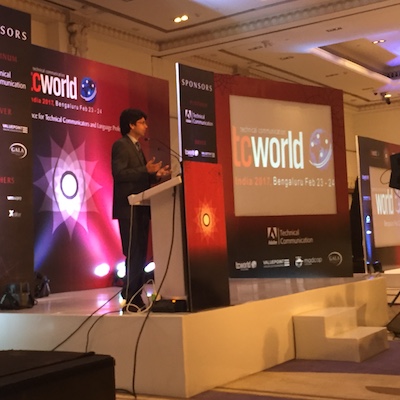
Positive, optimistic, energetic. Once again, the tcworld India conference in Bangalore did not disappoint.

This post is a follow-up to the Content interoperability case study by Scriptorium and Heretto (formerly easyDITA). To learn more about the project from the perspective of the AJCC, Heretto interviewed Laura Meyer, the AJCC 8th Edition Project Manager and Managing Editor, AJCC Cancer Staging Manual. Scriptorium is re-publishing this interview with permission from Heretto and Laura Meyer.

What if DITA could lead to better care for people with cancer? This case study shows how Scriptorium and Heretto (formerly easyDITA) worked with the American Joint Committee on Cancer (AJCC) to help give doctors faster, more targeted access to cancer staging information.