Savor the season with Scriptorium: Our favorite holiday recipes
Once again, it’s the time of year when we start… well, continue talking about good food. This blog is full of cozy recipes from our team.
In this episode of our Let’s Talk ContentOps! webinar series, Scriptorium CEO Sarah O’Keefe interviewed special guest Alyssa Fox, Senior VP of Marketing at The CapStreet Group. Discover critical enterprise content strategy insights that Alyssa has gathered throughout her journey from technical writer to marketing executive.
In this webinar, viewers learn:
The tcworld/tekom conference took place in Stuttgart, Germany, from November 5–7. The event is the largest technical communication conference in the world, typically with 2,500–3,500 attendees.
LavaCon 2024 delivered actionable insights, emphasizing that your business case for content operations requires strong alignment with business goals. Successful content modernization hinges on executive support, effective change management, and a wary eye on AI.
You’re probably tired of reading my articles about the business case for content ops. Here’s a more personal perspective as you consider a content ops initiative.
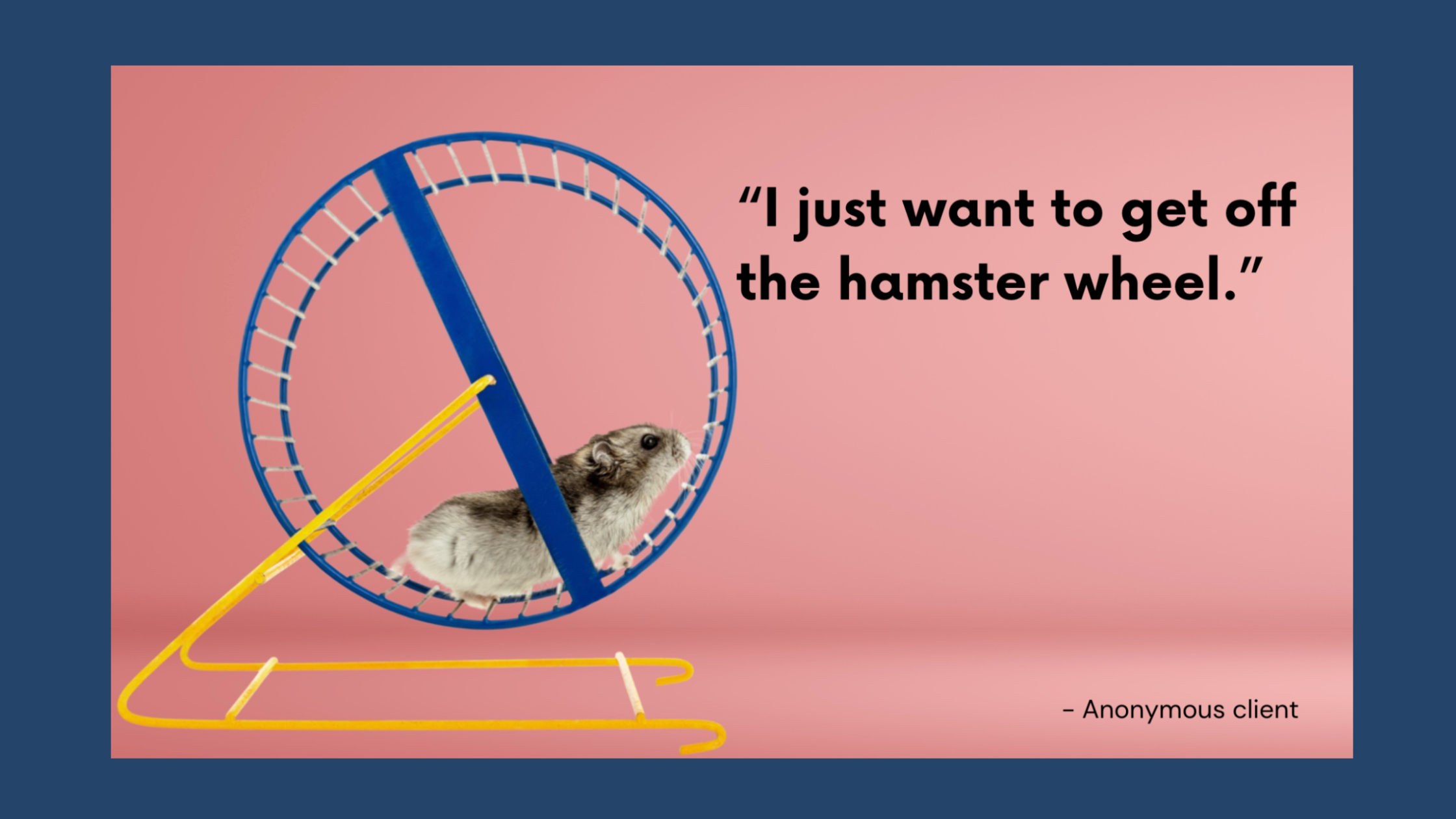
“I just want to get off the hamster wheel.”
— Anonymous client
One of our clients (you know who you are, hi!) said this in a meeting a few years ago.
Is it really possible to configure enterprise content—technical, support, learning & training, marketing, and more—to create a seamless experience for your end users? In episode 177 of the Content Strategy Experts podcast, Sarah O’Keefe and Bill Swallow discuss the reality of enterprise content operations: do they truly exist in the current content landscape? What obstacles hold the industry back? How can organizations move forward?
Sarah: You’ve got to get your terminology and your taxonomy in alignment. Most of the industry I am confident in saying have gone with option D, which is give up. “We have silos. Our silos are great. We’re going to be in our silos, and I don’t like those people over in learning content anyway. I don’t like those people in techcomm anyway. They’re weird. They’re focused on the wrong things,” says everybody, and so they’re just not doing it. I think that does a great disservice to the end users, but that’s the reality of where most people are right now.
Bill: Right, because the end user is left holding the bag trying to find information using terminology from one set of content and not finding it in another and just having a completely different experience.
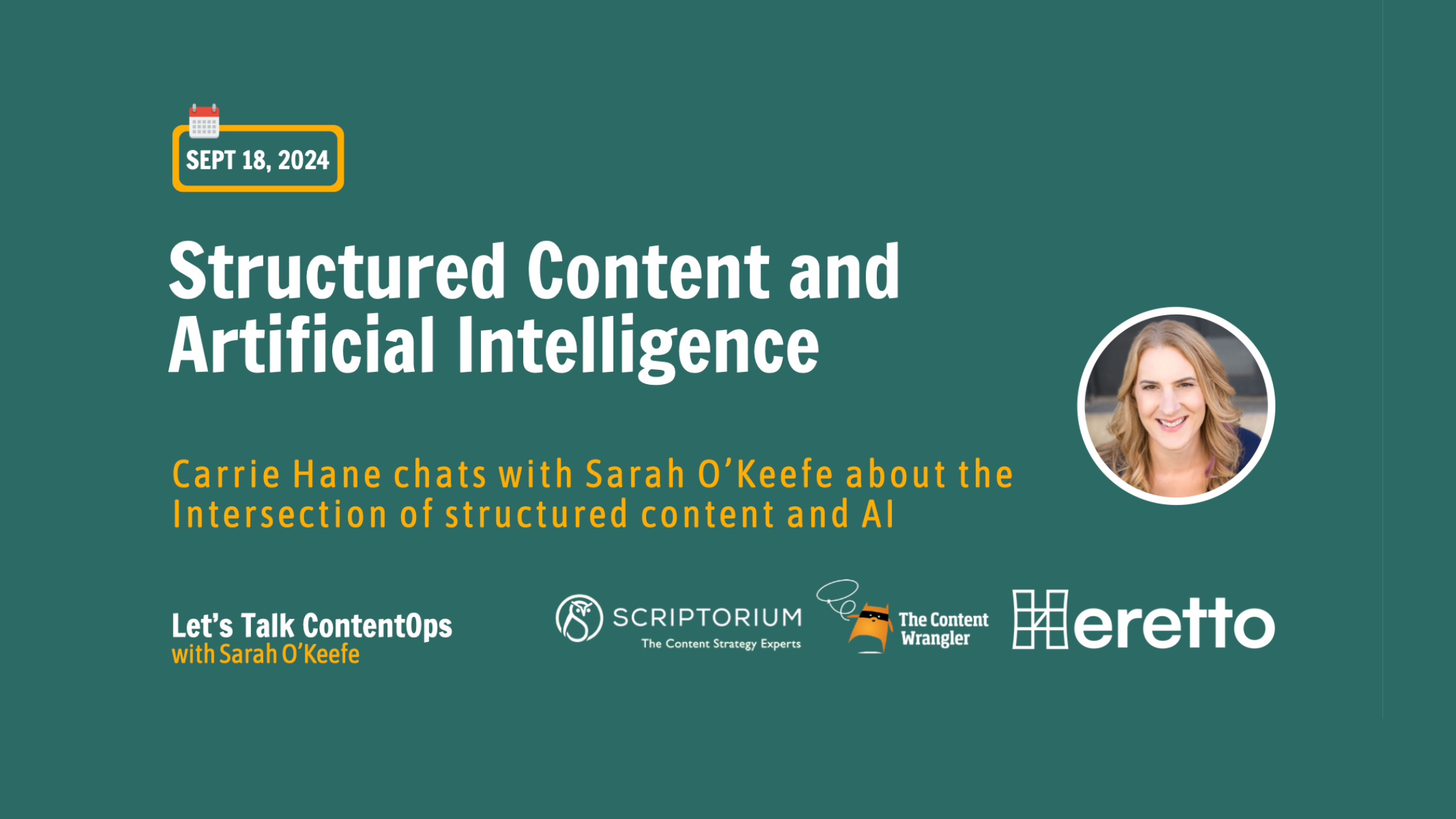
In this episode of our Let’s Talk ContentOps! webinar series, industry experts Sarah O’Keefe and Carrie Hane explore the intersection of structured content and artificial intelligence. Discover how structured content improves the reliability and performance of AI systems by increasing accuracy, reducing hallucinations, and supporting efficient content management.
In this webinar, attendees will learn:
Whether you’re surviving a content operations project or a journey through treacherous caverns, it’s crucial to plan your way out before you begin. In episode 176 of the Content Strategy Experts podcast, Alan Pringle and Christine Cuellar unpack the parallels between navigating horror-filled caves and building a content ops exit strategy.
Alan Pringle: When you’re choosing tools, if you end up something that is super proprietary, has its own file formats, and so on, that means it’s probably gonna be harder to extract your content from that system. A good example of this is those of you with Samsung Android phones. You have got this proprietary layer where it may even insert things into your source code that is very particular to that product line. So look at how proprietary your tool or toolchain is and how hard it’s going to be to export. That should be an early question you ask during even the RFP process. How do people get out of your system? I realize that sounds absolutely bat-you-know-what to be telling people to be thinking about something like that when you’re just getting rolling–
Christine Cuellar: Appropriate for a cave analogy, right?
Alan Pringle: Yes, true. But you should be, you absolutely should be.
With English as my first (and only) language, and being a first-time visitor to the incredible country of Japan, I found several takeaways for creating content with translation in mind.
Plus, in this blog, you’ll find delicious pictures of world-class food. (Caution: may cause salivation and a desperate urge to buy a plane ticket. Or is that just me?)
Are you looking for real-world examples of enterprise content operations in action? Join Sarah O’Keefe and special guest Adam Newton, Senior Director of Globalization, Product Documentation, & Business Process Automation at NetApp for episode 175 of The Content Strategy Experts podcast. Hear insights from NetApp’s journey to enterprise-level publishing, lessons learned from leading-edge GenAI tool development, and more.
We have writers in our authoring environment who are not writers by nature or bias. They’re subject matter experts. And they’re in our system and generating content. That was about joining us in our environment, reap the benefits of multi-language output, reap the benefits of fast updates, reap the benefits of being able to deliver a web-like experience as opposed to a PDF. But what I think we’ve found now is that this is a data project. This generative AI assistant has changed my thinking about what my team does. Yes, on one level, we have a team of writers devoted to producing the docs. But in another way, you can look at it and say, well, we’re a data engine.
— Adam Newton