Maximize your CCMS investment with AEM Guides training
Working in the AEM Guides CCMS? Unlock its full potential with self-paced, online AEM Guides training.

Working in the AEM Guides CCMS? Unlock its full potential with self-paced, online AEM Guides training.
Will cheap content cost your organization more in the long run? In this webinar, host Sarah O’Keefe and guest Dawn Stevens share how poor workflows, inaccurate source data, and the commoditization race can undermine both product quality and brand trust. Sarah and Dawn also discuss why strategic staffing and mature content ops create the foundation your AI initiatives need to deliver reliable content at scale.
Sarah O’Keefe: I write content that’s great for today. Tomorrow, a new development occurs, and my content is now wrong. We’re down the road of “entropy always wins.” We’re heading towards chaos, and if we don’t care for the content, it’ll fall apart. So what does it look like to have a well-functioning organization with an appropriate balance of automation, AI, and staffing?
Dawn Stevens: I think that goes back to the age-old question of, “What are the skills that we really think are valuable?” We have to see technical documentation as part of the product, not just supporting the product. That means that we, as writers, are involved in all of the design. As we design the documentation, we’re helping design the UX.
Your organization’s content debt costs more than you think. In this podcast, host Sarah O’Keefe and guest Dipo Ajose-Coker unpack the five stages of content debt from denial to action. Sarah and Dipo share how to navigate each stage to position your content—and your AI—for accuracy, scalability, and global growth.
The blame stage: “It’s the tools. It’s the process. It’s the people.” Technical writers hear, “We’re going to put you into this department, and we’ll get this person to manage you with this new agile process,” or, “We’ll make you do things this way.” The finger-pointing begins. Tech teams blame the authors. Authors blame the CMS. Leadership questions the ROI of the entire content operations team. This is often where organizations say, “We’ve got to start making a change.” They’re either going to double down and continue building content debt, or they start looking for a scalable solution.
— Dipo Ajose-Coker
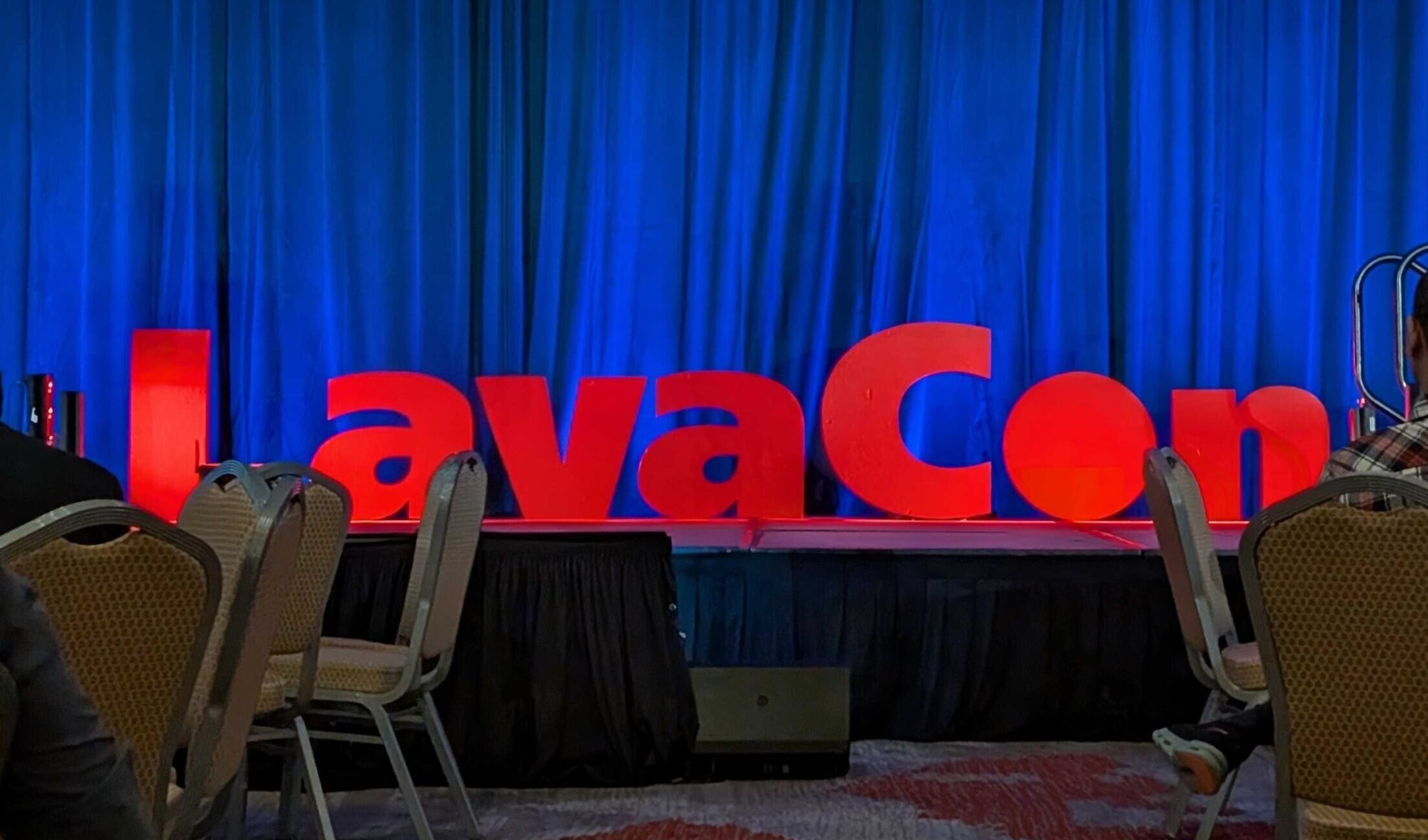
At LavaCon 2025, we investigated the impossible dream of customer content, uncovered the potential of structured learning content, and shared solutions to make sure your content doesn’t sleep with the fishes—or the whale sharks.

Teams are under pressure to do more—more formats, languages, publishing outputs, and audiences. After an acquisition, CompTIA faced fragmented systems, manual processes, and time-consuming formatting. In this webinar, see how CompTIA used structured learning content operations to scale globally and meet evolving delivery demands.
Now, we have a central content ecosystem where everything connects into one spot—our CCMS—where we can actually publish in many different ways. We can do our translations very seamlessly now with our translation memory service linked in. We can publish directly to our LMS record, and we can also deploy PDFs. There’s some other little things that we’ve developed over the years. For example, we map our content to the exam objectives for our certifications. That was always a very manual process. It is now automated, which is amazing.
— Becky Mann

CompTIA plays a pivotal role in the global technical ecosystem. As the largest vendor-neutral training and credentialing organization for technology professionals, CompTIA creates career-advancing opportunities across a wide range of disciplines—cybersecurity, infrastructure, data, and more.
With the support of Scriptorium and other partners, CompTIA consolidated fragmented workflows into a unified ecosystem for structured learning content. The transformation has improved production efficiency and allows CompTIA to deliver global content without pausing ongoing content production. Additionally, it allows instructional designers to invest in compelling learning experiences instead of spending their time manually formatting content.

We have several industry-leading sessions lined up for the rest of 2025. Learn about our upcoming events in this blog post.
Every time someone views your product content, it’s a purposeful engagement with direct business value. Are you making the most of that interaction? In this episode of the Content Operations podcast, special guest Patrick Bosek, co-founder and CEO of Heretto, and Sarah O’Keefe, founder and CEO of Scriptorium, explore how your techcomm traffic reduces support costs, improves customer retention, and creates a cohesive user experience.
Patrick Bosek: Nobody reads a page in your documentation site for no reason. Everybody that is there has a purpose, and that purpose always has an economic impact on your business. People who are on the documentation site are not using your support, which means they’re saving you a ton of money. It means that they’re learning about your product, either because they’ve just purchased it and they want to utilize it, so they’re onboarding, and we all know that utilization turns into retention and retention is good because people who retain pay us more money, or they’re trying to figure out how to use other aspects of the system and get more value out of it. There’s nobody who goes to a doc site who’s like, “I’m bored. I’m just going to go and see what’s on the doc site today.” Every person, every session on your documentation site is there with a purpose, and it’s a purpose that matters to your business.
In this episode of the Content Operations podcast, Sarah O’Keefe and Bill Swallow unpack the promise, pitfalls, and disruptive impact of AI on multilingual content. From pivot languages to content hygiene, they explore what’s next for language service providers and global enterprises alike.
Bill Swallow: I think it goes without saying that there’s going to be disruption again. Every single change, whether it’s in the localization industry or not, has resulted in some type of disruption. Something has changed. I’ll be blunt about it. In some cases, jobs were lost, jobs were replaced, new jobs were created. For LSPs, I think AI is going to, again, be another shift, the same that happened when machine translation came out. LSPs had to shift and pivot how they approach their bottom line with people. GenAI is going to take a lot of the heavy lifting off of the translators, for better or for worse, and it’s going to force a copy edit workflow. I think it’s really going to be a model where people are going to be training and cleaning up after AI.
Is AI really ready to generate your training materials? In this episode, Sarah O’Keefe and Alan Pringle tackle the trends around AI in learning content. They explore where generative AI adds value—like creating assessments and streamlining translation—and where it falls short. If you’re exploring how AI can fit into your learning content strategy, this episode is for you.
Sarah O’Keefe: But what’s actually being said is AI will generate your presentation for you. If your presentation is so not new, if the information in it is so basic that generative AI can successfully generate your presentation for you, that implies to me that you don’t have anything interesting to say. So then, we get to this question of how do we use AI in learning content to make good choices, to make better learning content? How do we advance the cause?